Bamboo flooring is a fast-renewing alternative to slow-growth hardwood. For Singapore homes and light-commercial interiors we supply and install strand-woven and engineered bamboo planks, handle on-site acclimatisation and finishing, and document the care interval after handover. This page covers the environmental case for bamboo, what suits Singapore’s climate, and the installation and maintenance points that matter most.

Bamboo is a grass, not a tree. The species used for flooring (commonly Phyllostachys edulis, “moso” bamboo) reaches harvest size in roughly 4–6 years, compared with 40–80 years (and longer) for the slow-growth tropical hardwood species typically specified for solid timber flooring. Each harvest cuts mature culms while the underground rhizome stays alive and regenerates, so a single planted area can be harvested on a short, repeating cycle rather than cleared and replanted.
In practical contractor terms this matters for three reasons:
We treat low-VOC and responsible-sourcing claims as items to be verified against the supplier’s technical data sheet (product VOC declaration, emission class) and chain-of-custody documentation. We do not repeat such claims on this page unless we hold that documentation for the specific product on a project.
There are two construction types we install in Singapore:
Shredded bamboo fibre is mixed with a binder and compressed under heat and high pressure into dense blanks, which are then milled into planks. The resulting board is significantly harder than most common hardwoods — strand-woven bamboo typically reports a high Janka rating, making it a good candidate for residential traffic and light commercial use. Surface tone ranges from natural pale-blonde, through caramel (carbonised) to dark stains.
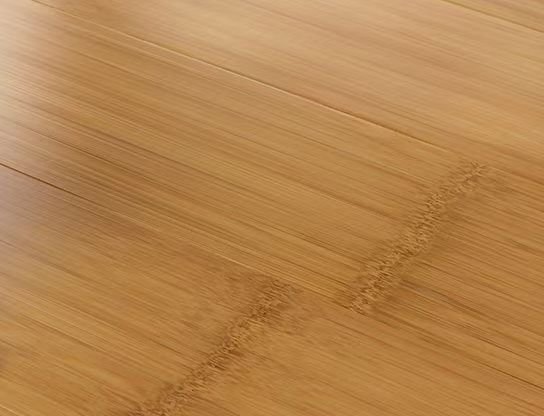
Bamboo strips are bonded edge-to-edge (horizontal) or on edge (vertical) into a multi-layer plank. These boards show the classic bamboo nodes and a uniform grain rhythm. They are less dense than strand-woven but offer a clean, consistent visual and a competitive price point for residential rooms.
Singapore is humid year-round with high indoor relative humidity outside of conditioned spaces. Bamboo behaves like engineered timber in this environment — it is dimensionally stable when correctly acclimatised and installed, but it is not immune to moisture.
Bamboo flooring suits dry, conditioned indoor areas — living rooms, bedrooms, dining areas, hallways, study rooms and light-commercial interiors. It is a good visual fit for modern Scandinavian, Japanese-influenced and warm-neutral interiors.
We would advise differently for: bathrooms and toilets (use tile); open balconies and outdoor decks (use hardwood decking or composite); kitchens with frequent spills (consider tile, vinyl-plank or a robustly finished engineered wood with careful joint sealing); and sports halls with line marking (use parquet or sports-grade timber systems).
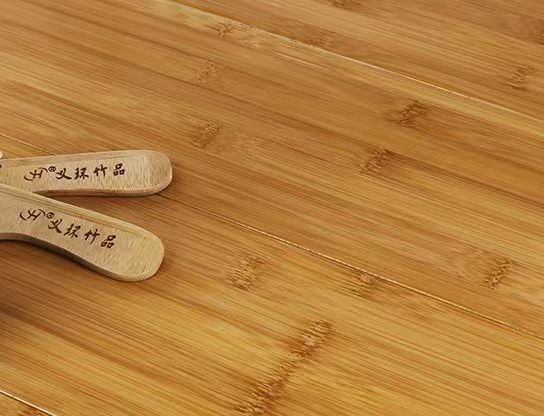
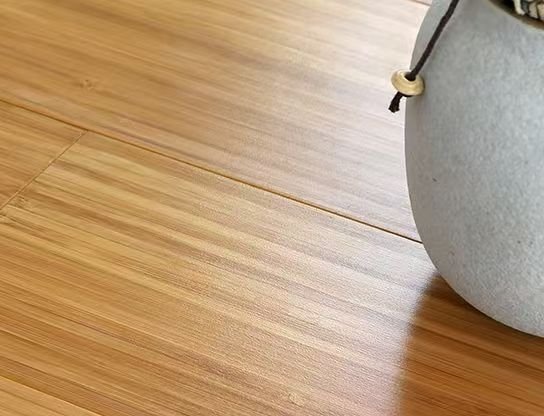
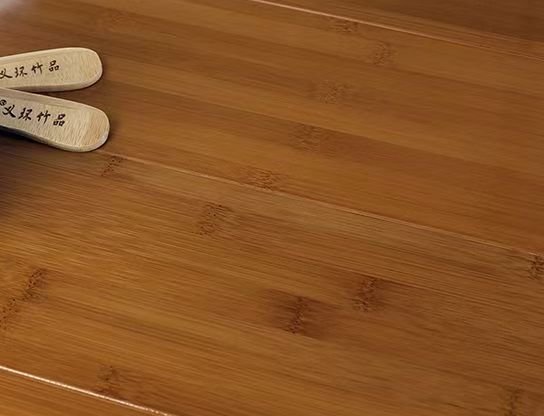
Selected on-site photographs from bamboo flooring projects in Singapore — strand-woven and engineered planks installed in condominium and residential interiors.
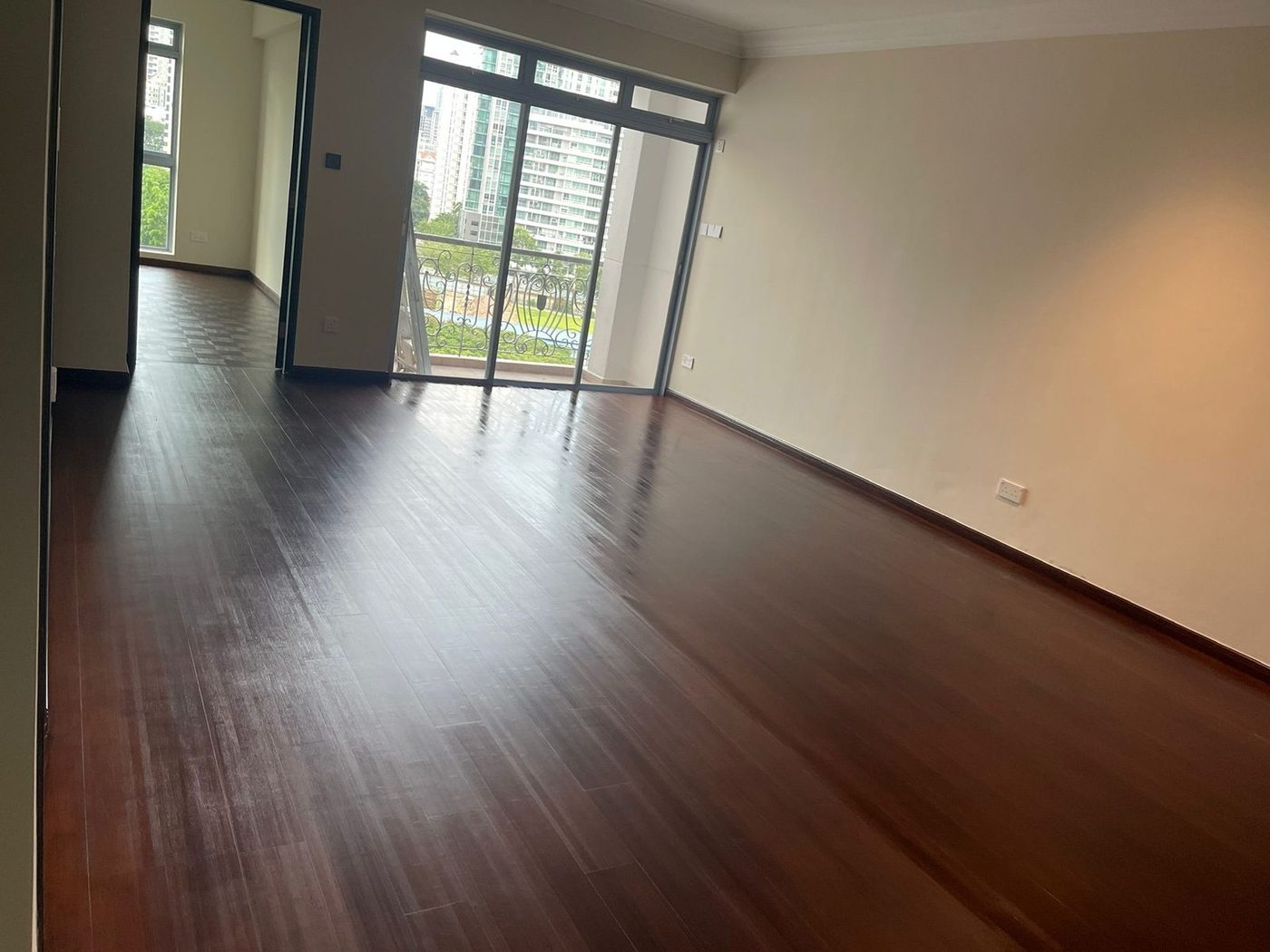


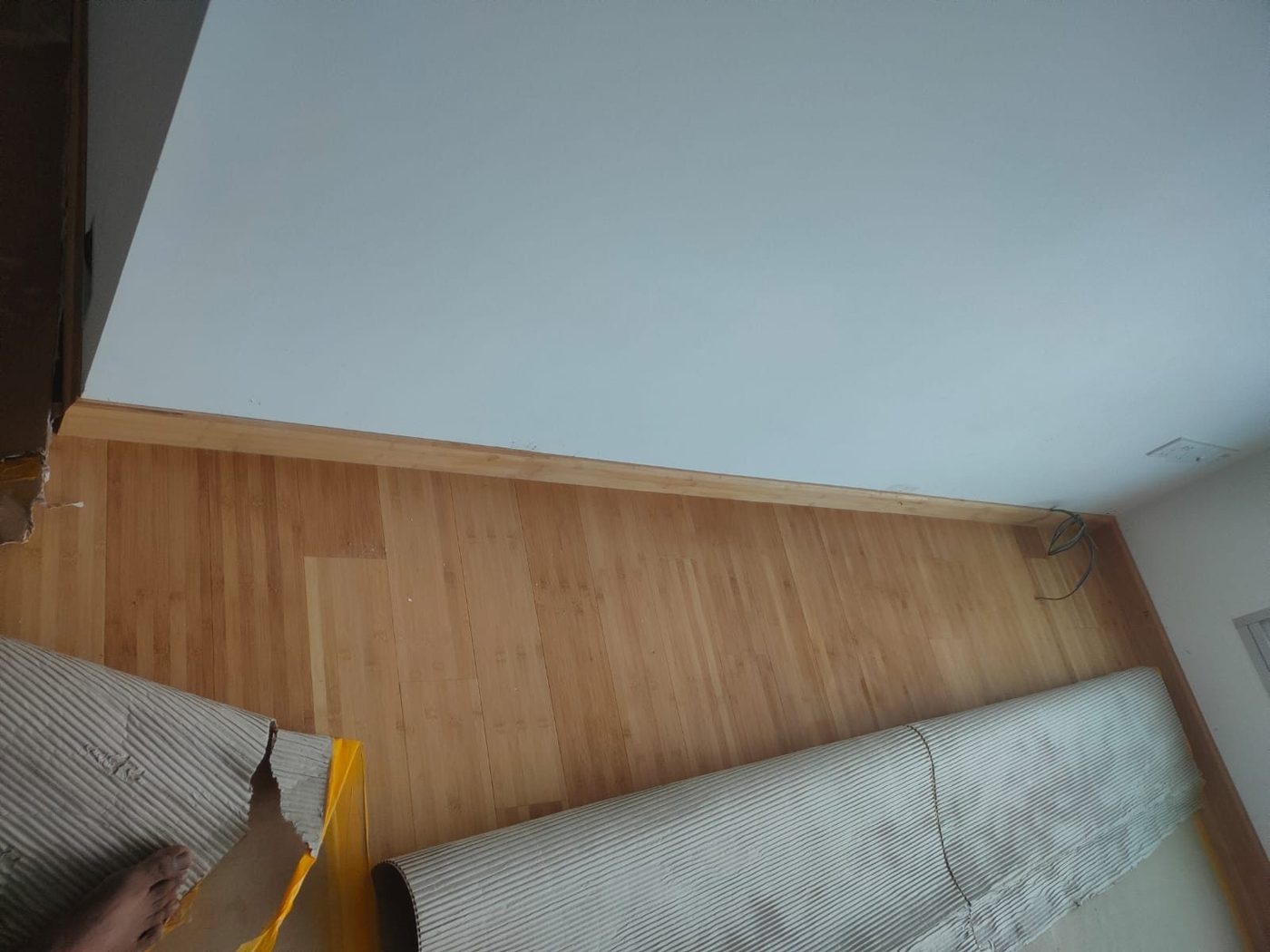

Bamboo plank surface tones range from pale natural through warm caramel and amber to deeper stains. Sheen options include matt, satin and semi-gloss. Final colour on the installed floor varies slightly from a hand-held swatch because of room lighting and plank-to-plank natural variation — this is expected.



Send room dimensions, photos of the existing floor and a brief — we reply with strand-woven and engineered bamboo options, subfloor and acclimatisation assumptions, and an itemised quotation.